Learn about DUI penalties, including fines, jail time, license suspension, and how convictions impact your driving record and future opportunities.
Driving under the influence in California brings harsh penalties that reach into every part of your life. You face arrest, court dates, fines, and a suspended license. You may also face jail, probation, and mandatory classes. Each step feels confusing and cold. You may worry about your job, your family, and your record. California law uses a strict system that increases punishment with each offense. First, the state looks at your blood alcohol level. Next, it reviews your driving record and any prior DUIs.
Then the court decides your sentence within set ranges. This process can feel one sided. However, you still have rights. Careful planning and strong DUI defense can change the outcome. This blog explains what to expect, what the court looks at, and what choices you still control. You deserve clear facts so you can face this moment with steady focus.
How California Defines a DUI
California law focuses on two simple questions. Were you driving. Were you under the influence.
In most cases the state uses your blood alcohol concentration or BAC. The usual limits are:
- 0.08 percent or higher for most adult drivers
- 0.04 percent or higher for commercial drivers
- 0.01 percent or higher for drivers under 21
Police can also claim you drove under the influence of drugs. That can include legal drugs or legal cannabis. The key question is whether the drug affected how you drove.
You can read the basic rules in California Vehicle Code section 23152 on the official site of the California Legislature.
What Happens After a DUI Arrest
A DUI case runs on two tracks. One track is the criminal court. The other track is the DMV.
First the officer arrests you and may take you to jail. Your license may be taken and you may receive a pink temporary license. Then the officer sends a report to the DMV and to the local prosecutor.
Next you must act fast. You usually have 10 days to request a DMV hearing to fight a license suspension. If you miss that window the DMV can suspend your license even before the court case ends.
Finally the criminal case moves forward. You receive a court date and you can plead guilty. You can plead not guilty and you can ask for police reports and test records. Each choice has long term effects on your license and record.
First, Second, and Third DUI Penalties
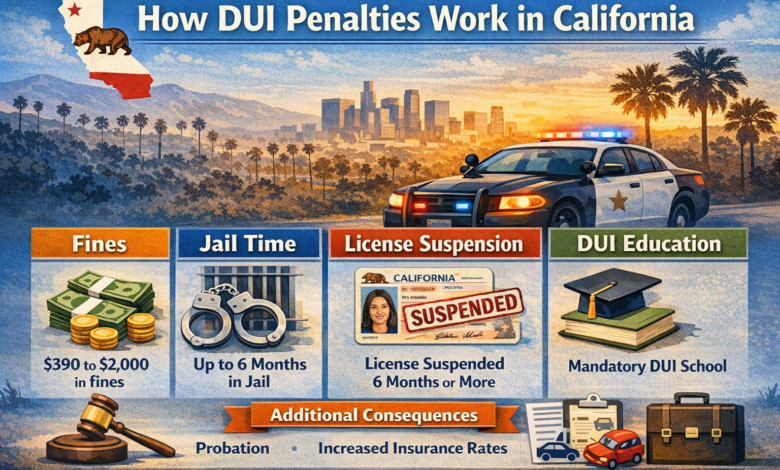
California raises penalties with each new DUI within 10 years. The table below shows common ranges for adult drivers with no injuries and no extra charges.
| Offense | Jail Time | Fines and Fees | License Impact | DUI School | Probation |
|---|---|---|---|---|---|
| First DUI | Up to 6 months | About $1,800 to $3,000 | 6 month suspension | 3 to 9 months | 3 to 5 years |
| Second DUI | 96 hours to 1 year | About $2,000 to $4,000 | 2 year suspension | 18 to 30 months | 3 to 5 years |
| Third DUI | 120 days to 1 year | About $2,500 to $5,000 | 3 year revocation | 30 months | 3 to 5 years |
Court costs and penalty fees increase the real cost far beyond the base fine. You may also pay for towing, storage, classes, and higher insurance.
License Suspension and Ignition Interlock Devices
Losing your license hurts work, school, and family care. California uses both hard suspensions and restricted licenses.
First the DMV can order a hard suspension. During that time you cannot drive at all. The length depends on your record and BAC level.
Next you may qualify for a restricted license. This can let you drive to work, school, or treatment. Many drivers must install an ignition interlock device or IID. This small device checks your breath before the car starts.
The California Department of Motor Vehicles explains these rules on its official DUI page.
Extra Factors That Increase Penalties
Certain facts can increase punishment. Courts call these sentencing enhancements. Common examples include:
- Very high BAC such as 0.15 percent or higher
- Refusing a chemical test
- Speeding while under the influence
- Having a child under 14 in the car
- Causing a crash with injury or death
These facts can bring extra jail time. They can increase DUI school time. They can also turn a misdemeanor into a felony when someone suffers injury or death.
Long Term Consequences for You and Your Family
A DUI does not end when probation ends. The record can follow you for years.
You may face higher car insurance. You may lose some job options and also you may have problems with professional licenses. May you face stress at home when money feels tight and rides become hard.
These quiet costs often hurt more than the fine. They affect daily life and they affect your sense of control. They affect your children when simple trips become complex.
Your Rights and Your Choices
Even when the state seems strong you still have rights.
- You can challenge the traffic stop and arrest
- You can question the test methods and devices
- You can present witnesses and records
- You can seek treatment and show proof of change
Courts often look at three things. Your record. The facts of the stop. Your steps after the arrest. Honest action can influence the result.
Steps You Can Take Today
You cannot erase the past. You can shape what happens next.
- Write down what happened during the stop and arrest
- Gather papers such as tickets, release forms, and test slips
- Mark the 10 day DMV deadline on a calendar
- Arrange safe rides so you do not risk driving on a suspension
- Consider counseling or support groups if alcohol or drugs feel hard to control
California DUI law feels strict for a reason. The goal is fewer deaths and fewer injuries on the road. Yet the law also allows new starts. Steady steps and clear choices can reduce harm for you and for your family.