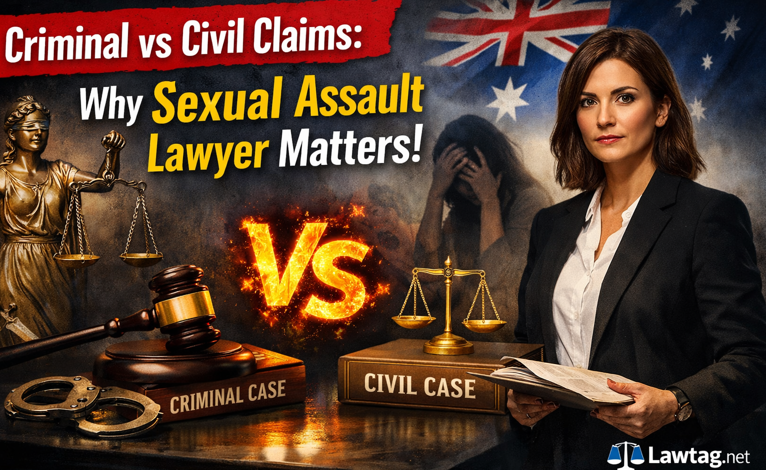
Understand criminal vs civil claims and why speaking to a sexual assault lawyer in Australia is essential to protect your rights and seek justice.
When people think about justice after sexual assault, they usually picture the criminal system. Police reports, courtrooms, verdicts. That is one path, but it is not the only one.
In Australia, survivors often have two separate legal avenues available to them, criminal and civil. They serve different purposes, follow different processes, and lead to different outcomes. Understanding the distinction can make a big difference when deciding what feels right for you.
The Criminal Path, Focused on Accountability
A criminal case is initiated by the state, not the survivor.
Once a report is made, police investigate and, if there is enough evidence, charges may be laid. The case is then prosecuted by the state, with the goal of proving guilt beyond a reasonable doubt.
Key points to understand:
- The process is driven by police and prosecutors
- The standard of proof is high
- Outcomes typically involve penalties for the offender, such as imprisonment or fines
- You may be required to give evidence in court
While criminal proceedings can provide a sense of accountability, they can also be lengthy and emotionally demanding. Not all cases proceed to trial, and outcomes are not always predictable.
The Civil Path, Focused on Compensation
A civil claim is different. It is initiated by you, with the support of your legal team, and is aimed at seeking compensation for the harm you have experienced.
This might involve:
- An individual offender
- An institution, such as a school, workplace, or organisation
- Any party that may have failed in its duty of care
Unlike criminal cases, civil claims are assessed on the balance of probabilities, which is a lower threshold than “beyond reasonable doubt”.
Civil claims can take into account:
- Psychological and emotional impact
- Medical and counselling expenses
- Loss of income or career opportunities
- Ongoing effects on your day-to-day life
For many survivors, this pathway provides a more direct form of recognition for what they have been through.
Can You Pursue Both?
Yes, and this is where things often get misunderstood.
Criminal and civil matters can run separately, and in some cases, at the same time. One does not automatically exclude the other.
For example:
- You might pursue a civil claim even if no criminal charges were laid
- A civil claim can still succeed even if a criminal case did not result in a conviction
- You may choose to wait until a criminal matter is finalised before starting a civil process
Each situation is different, which is why getting tailored advice early on can help you avoid unnecessary confusion.
Why Legal Advice Matters Early
The biggest mistake people make is assuming they need to choose a path immediately, or worse, not exploring their options at all.
Speaking to experienced sexual abuse lawyers early in the process can help you:
- Understand which pathways are available to you
- Clarify the pros and cons of each option
- Avoid delays that could impact your claim
- Feel more prepared for what lies ahead
Importantly, it is not about being pushed into action. It is about having the information to make a decision that feels right for you.
If you are unsure where to start, you can learn more by speaking with trusted sexual abuse lawyers who understand how both systems operate in Australia.
The Emotional Side of Legal Decisions
Legal processes are not just technical, they are personal.
Some survivors want accountability through the criminal system. Others prefer the privacy and control that can come with a civil claim. Many are unsure, and that is completely normal.
What matters is that the decision reflects your priorities, your readiness, and your comfort level.
A good lawyer will recognise that and work with you at your pace, not rush you into a direction that does not feel right.
There Is No “One Right Path”
It is easy to think there is a correct way to pursue justice, but the reality is more nuanced.
Some people choose to report to the police. Others focus on compensation. Some do both. Some decide not to proceed at all after learning more about the process.
All of these choices are valid.
What matters is understanding what is available to you and having the support to make an informed decision.
A Clearer Way Forward
The difference between criminal and civil claims is not always obvious at first glance, but it becomes clearer once you have the right guidance.
Even a single conversation with a lawyer can help you make sense of your options and reduce the uncertainty that often surrounds these decisions.
If you have been weighing things up or simply want to understand where you stand, reaching out for advice can be a practical first step. You are not committing to anything, you are just giving yourself the information needed to move forward in a way that feels right for you.