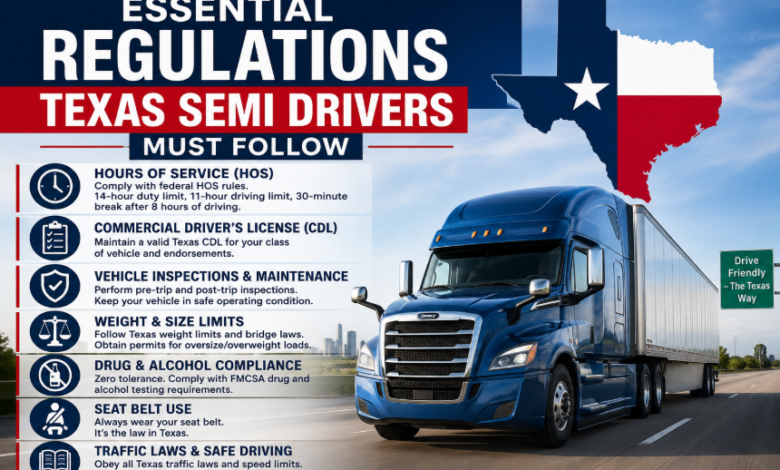
In Texas, semi-drivers play a crucial role in the transportation industry, ensuring that goods reach their destinations safely and efficiently. However, with this responsibility comes many regulations designed to maintain road safety, protect drivers, and ensure compliance with state and federal laws. Below, we outline the key regulations that semi-drivers in Texas must adhere to, emphasizing their importance in maintaining a safe driving environment.
1. Licensing and Endorsements
Commercial Driver’s License (CDL) Requirements
Drivers must possess a valid Commercial Driver’s License (CDL) to operate a semi-truck in Texas. The Texas Department of Public Safety (DPS) has established specific requirements for obtaining a CDL, which include:
Age Requirements– Drivers must be at least 18 years old to operate within Texas and 21 years old for interstate driving.
Written and Skills Tests– Applicants must pass a written knowledge and skills test demonstrating their ability to operate a commercial vehicle safely.
Medical Certification– A valid medical examiner’s certificate is required, indicating that the driver meets health standards set by the Federal Motor Carrier Safety Administration (FMCSA).
Endorsements
Semi-drivers may also need specific endorsements on their CDL depending on the type of cargo being transported. Common endorsements include:
Hazardous Materials- Required for transporting hazardous materials, drivers must pass additional background checks and knowledge tests.
Tanker– Necessary for driving vehicles transporting bulk liquids.
Double/Triple Trailers– Needed for operating vehicles with multiple trailers.
2. Hours of Service Regulations
Driving Limits
To prevent fatigue-related accidents, the FMCSA has established Hours of Service (HOS) regulations that dictate the maximum driving hours for commercial drivers. Key components include:
11-Hour Driving Limit– Drivers may operate a commercial vehicle for a maximum of 11 hours after ten consecutive hours off duty.
14-Hour Duty Limit– A driver’s workday cannot exceed 14 hours after ten consecutive hours off duty, including driving and non-driving.
30-Minute Break Requirement– Drivers must take a 30-minute break after 8 hours of driving.
Tracking Compliance
Drivers must maintain accurate logs of their driving hours, typically using electronic logging devices (ELDs) to track compliance with HOS regulations. This not only enhances safety but also ensures that drivers are adhering to state and federal laws.
3. Vehicle Maintenance and Inspections
Pre-Trip Inspections
Before beginning their routes, semi-drivers must conduct thorough pre-trip inspections. These inspections include checking the following:
Brakes- Ensuring they are functioning properly.
Lights and Reflectors- Confirm that all lights and reflectors are operational.
Tires- Inspecting for proper inflation and tread depth.
Load Securement- Verifying that cargo is securely fastened to prevent shifting during transport.
Regular Maintenance
Beyond pre-trip inspections, semi-drivers and their employers must adhere to regular maintenance schedules. This includes routine servicing of vehicles to ensure they remain in safe operating condition, thereby reducing the risk of breakdowns and accidents on the road.
4. Safety Regulations and Training
Safety Protocols
Texas semi-drivers must comply with various safety regulations designed to protect them and other road users. This includes:
Use of Seatbelts- Drivers and all passengers must always wear seatbelts.
Substance Abuse Policies- Employers must implement drug and alcohol testing programs, adhering to federal regulations concerning substance abuse.
Training Programs
Ongoing training is vital for maintaining safety standards. Employers should provide comprehensive training programs covering defensive driving techniques, emergency procedures, and safe cargo handling practices.
5. Environmental Regulations
Emission Standards
Semi-drivers in Texas must also be aware of environmental regulations related to emissions. The Texas Commission on Environmental Quality (TCEQ) enforces standards to reduce air pollution from diesel engines. Compliance may require the installation of emission control devices and adherence to idling reduction policies.
Fuel Efficiency Standards
Adopting fuel-efficient driving practices not only helps in compliance with environmental regulations but also reduces operating costs. Drivers should be trained in techniques such as maintaining steady speeds, minimizing idling time, and ensuring proper vehicle maintenance to improve fuel efficiency.
6. Compliance with Local Laws
City and County Regulations
In addition to state and federal regulations, semi-drivers must comply with local laws that may affect their routes. This includes:
Weight Restrictions- Certain local roads may have weight limits that drivers must observe.
Traffic Regulations- Drivers must know specific traffic laws in different municipalities, including speed limits and designated truck routes.
Parking and Rest Areas
Finding appropriate parking can be challenging for semi-drivers. It is essential to know the locations of designated truck parking areas, and rest stops to avoid fines and ensure compliance with HOS regulations.
Compliance with Commercial Vehicle Safety Regulations in Texas is Required
In summary, semi-drivers in Texas must navigate a complex landscape of regulations designed to ensure road safety, compliance, and efficiency. By adhering to licensing requirements, HOS regulations, vehicle maintenance protocols, and local laws, drivers can contribute to safer highways and a more reliable transportation industry. Staying informed and compliant not only protects drivers but also enhances the overall safety of all road users. Visit this website to learn more.