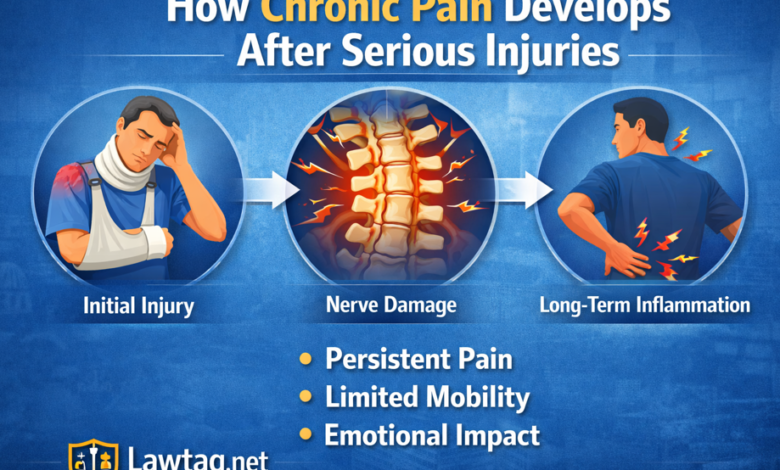
Chronic pain develops over time due to injury, illness, or nerve damage, impacting daily life, mobility, and emotional well-being if left untreated.
Broken bones may heal, but for many injury survivors, the pain that begins with an accident doesn’t end when the wounds do. Chronic pain, broadly defined as pain persisting for three months or longer, is one of the most common and least understood consequences of serious physical trauma. It can happen after car accidents, workplace injuries, slip-and-fall incidents, and anything else that causes serious damage to the body.
Understanding how acute injury develops into long-term pain is important for managing recovery as well as for navigating the legal and financial aftermath of an injury that has changed daily life.
When Acute Pain Becomes Chronic
When the body sustains an injury, it triggers an immediate inflammatory response. Blood flow increases to the affected area, nerve endings become sensitized, and pain signals are sent to the brain as a protective mechanism – a signal to stop using the damaged tissue and allow it to heal. This is acute pain, and it fades under normal circumstances as the injury repairs itself.
Chronic pain develops when this process doesn’t fully resolve as expected. Central sensitization is one of the most significant. After prolonged or intense pain signaling, the central nervous system can essentially rewire itself, becoming hyper-responsive to stimuli that wouldn’t ordinarily cause pain. The brain and spinal cord begin to amplify pain signals even after the original tissue damage heals. For example, localized pain from a herniated disc or nerve injury can evolve into widespread, persistent discomfort without a clear structural source.
Nerve damage is another major concern. Injuries involving the spine as well as significant soft tissue trauma can directly damage peripheral nerves, which is the network responsible for carrying sensation signals throughout the body. When nerves are compressed, torn, or severed, they may regenerate improperly, leading to neuropathic pain characterized by burning, shooting, or electric sensations.
Finally, structural changes from the original injury also play a role. Fractures that heal with minor misalignment, scar tissue that forms around joints, or cartilage loss from impact trauma can create mechanical problems that cause ongoing pain with movement. These changes may not be apparent immediately after an accident, often making themselves known over months as the body compensates for the initial damage.
Injuries Most Likely to Cause Chronic Pain
While any serious injury carries some risk of long-term pain, certain types are associated with particularly high rates of chronic pain development:
- Traumatic brain injuries (TBI): Even mild TBIs (also known as concussions) can disrupt pain-processing regions of the brain, leading to persistent headaches, neck pain, and heightened sensitivity to sensory input. Moderate to severe TBIs carry an even greater risk of complex, centralized pain syndromes.
- Spinal cord and back injuries: Herniated discs, vertebral fractures, and nerve root compression injuries frequently result in chronic back pain, radiating nerve pain into the limbs, and in some cases permanent neurological changes. Spinal injuries are among the most common sources of long-term disability following an accident.
- Soft tissue injuries: Damage to muscles, tendons, and ligaments, especially in the neck and shoulders after a whiplash accident, can lead to myofascial pain syndrome, a condition involving persistent muscle tenderness and pain that can spread beyond the original injury site.
- Joint injuries: Significant trauma to the knee, hip, or shoulder can accelerate cartilage breakdown and lead to post-traumatic osteoarthritis, a condition in which joint pain and stiffness develop years after the initial injury.
- Complex Regional Pain Syndrome (CRPS): In some cases, especially following limb injuries or surgeries, the nervous system develops an abnormal and prolonged pain response known as CRPS. This condition is characterized by intense, burning pain, changes in skin color and temperature, and hypersensitivity far out of proportion to the original injury.
- Crush injuries and amputations: Severe trauma that compresses or destroys large areas of tissue, such as from industrial accidents or high-impact collisions, can cause permanent nerve and muscle damage. Amputees may also experience phantom limb pain, which is among the most difficult to manage as it originate within the nervous system itself.
- Internal organ injuries: Blunt force trauma to the abdomen or chest can damage organs in lasting ways. Chronic abdominal pain, digestive complications, and referred pain are all potential concerns of serious internal trauma.
Broader Impact and Legal Relevance
Research consistently shows that long-term pain is closely linked to depression, anxiety, sleep disruption, and social withdrawal. The inability to work, participate in hobbies, or perform everyday tasks leads to financial strain and reduced quality of life in ways that are hard to quantify. This is one reason why chronic pain claims are among the most contested in personal injury litigation; even debilitating conditions are not always apparent through standard diagnostic tests.
Medical documentation is critical for an injury survivor dealing with chronic pain. Consistent records from treating physicians, pain specialists, neurologists, and mental health providers will establish a clear timeline that links the original injury to an ongoing condition. Pain journals, functional assessments, and records of attempted treatments also serve as evidence of a persistent and life-altering condition.
For those whose chronic pain comes from someone else’s negligence, such as a reckless driver, an unsafe property, or a dangerous work environment, working with a lawyer like injury attorney Rick Barrera is essential to ensure that the full impact of long-term suffering is considered in a legal claim. Chronic pain often requires ongoing treatment, career adjustments, and personal accommodations for years or even decades. A personal injury lawyer experienced in serious injury cases will understand how to present medical evidence, work with expert witnesses, and pursue compensation that reflects the long-term reality of living with persistent pain.
For the many injury survivors who are told that their acute injury has healed while they continue to suffer, understanding the mechanisms behind why chronic pain develops is a meaningful first step toward better medical care and a clearer picture of what recovery may require.