For decades, legal compliance was largely viewed as a milestone in infrastructure development. Obtain the permits. Complete the environmental review. Award the contract. Break ground. Today, that sequence no longer reflects reality.
Modern infrastructure projects operate within an environment of constantly evolving regulations, environmental standards, procurement rules, ESG requirements, and climate resilience policies.
Compliance is no longer something verified at the end of the design process. It has become one of the variables that shapes the project from the very beginning.
According to Alessandro Mazzi, engineer and technical leader at Fincosit, one of Italy’s longest-established marine engineering companies, this shift is fundamentally changing the role of engineers.
“Engineering is no longer just about solving technical problems,” Mazzi says. “Every design decision now carries technical, economic, environmental, and increasingly legal consequences. Compliance can no longer be treated as a separate phase of a project. It has to be designed into the project itself.”
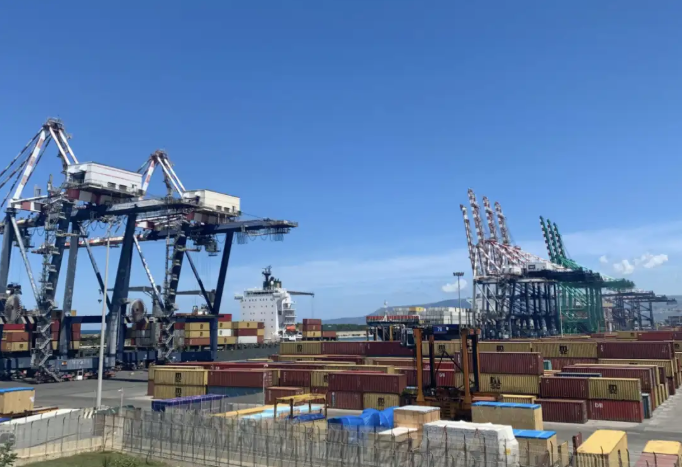
That idea is becoming increasingly relevant across the global infrastructure sector. Ports, transportation corridors, coastal protection systems, and major civil engineering projects are expected to remain in service for fifty, seventy, or even one hundred years. During that lifespan, regulations will inevitably evolve. Environmental standards will change. Procurement frameworks will be updated. Climate adaptation requirements will become more demanding.
The challenge is no longer designing infrastructure that complies with today’s regulations.
The challenge is designing infrastructure capable of remaining effective within tomorrow’s regulatory environment. This is where the concept of Compliance by Design is gaining momentum.
Rather than treating legal compliance as a checklist completed before construction begins, the approach integrates legal, environmental, technical, and governance considerations into the earliest stages of engineering.
The objective is not simply to reduce regulatory risk today, but to create infrastructure that remains resilient as legal and policy frameworks continue to evolve.
“Infrastructure often outlives the regulations under which it was originally designed,” Mazzi explains. “That means engineers have a responsibility to anticipate change, not simply respond to current requirements. Good engineering is increasingly about designing projects that can adapt over time.”
The implications extend well beyond legal departments. Managing regulatory risk has become an integral part of engineering quality itself. Decisions regarding materials, maintenance strategies, construction methods, environmental mitigation, or operational flexibility can significantly influence future permitting, liability exposure, lifecycle costs, and long-term asset performance.
As a result, infrastructure development is becoming far more interdisciplinary than in previous decades.
Engineers increasingly work alongside environmental specialists, legal advisors, procurement professionals, ESG experts, and risk managers – not because their roles overlap, but because today’s projects require decisions that simultaneously address technical performance, regulatory certainty, and long-term governance.
For organizations delivering complex infrastructure, this integrated approach is becoming less of a competitive advantage and more of an operational necessity.
“The goal is no longer simply building infrastructure that meets today’s standards,” Mazzi says. “The goal is building infrastructure capable of remaining reliable, sustainable, and legally resilient throughout its entire lifecycle.”
That represents a profound shift in how major projects are conceived. For many years, regulation was perceived primarily as a constraint on engineering. Increasingly, it is becoming one of the elements that defines engineering excellence itself.
The infrastructure projects that create the greatest long-term value will not simply be those that withstand environmental forces or increasing demand. They will be those capable of navigating decades of evolving legal, regulatory, and societal expectations without losing their effectiveness.
In that sense, the legal life of infrastructure begins long before the first foundation is poured.
About Fincosit
Founded in 1905, Fincosit is one of Italy’s leading marine engineering and port infrastructure companies. For more than 120 years, the company has specialized in the design and construction of complex maritime works, including ports, breakwaters, coastal infrastructure, and marine civil engineering projects. Today, Fincosit continues to develop long-life infrastructure solutions by integrating engineering expertise with resilience, sustainability, and risk-based project management.